BIM & Digital Twin
Data-based control over the entire building life cycle.

Digital models as a project standard.
Construction starts in the digital space
At Heinle, BIM and Digital Twin support the entire life cycle of a project. From the early concept phase through detailed planning and construction to operation, digital models serve as a central basis for work.
As the project matures, the digital twin is becoming increasingly important, for example for facility management, operational optimization or sustainable concepts such as urban mining. The economic success of a project depends largely on the consistent use and continuous implementation of BIM.
Clarity instead of isolated solutions
Many clients are still at the beginning of the digital way of working. Technology breaches between 2D and 3D, analog and digital processes, or false expectations mean that the potential of BIM is not being exploited.
Heinle meets these challenges with a clearly structured, consistent BIM approach. Consistent data, transparent processes and reliable results are the focus throughout all project phases.
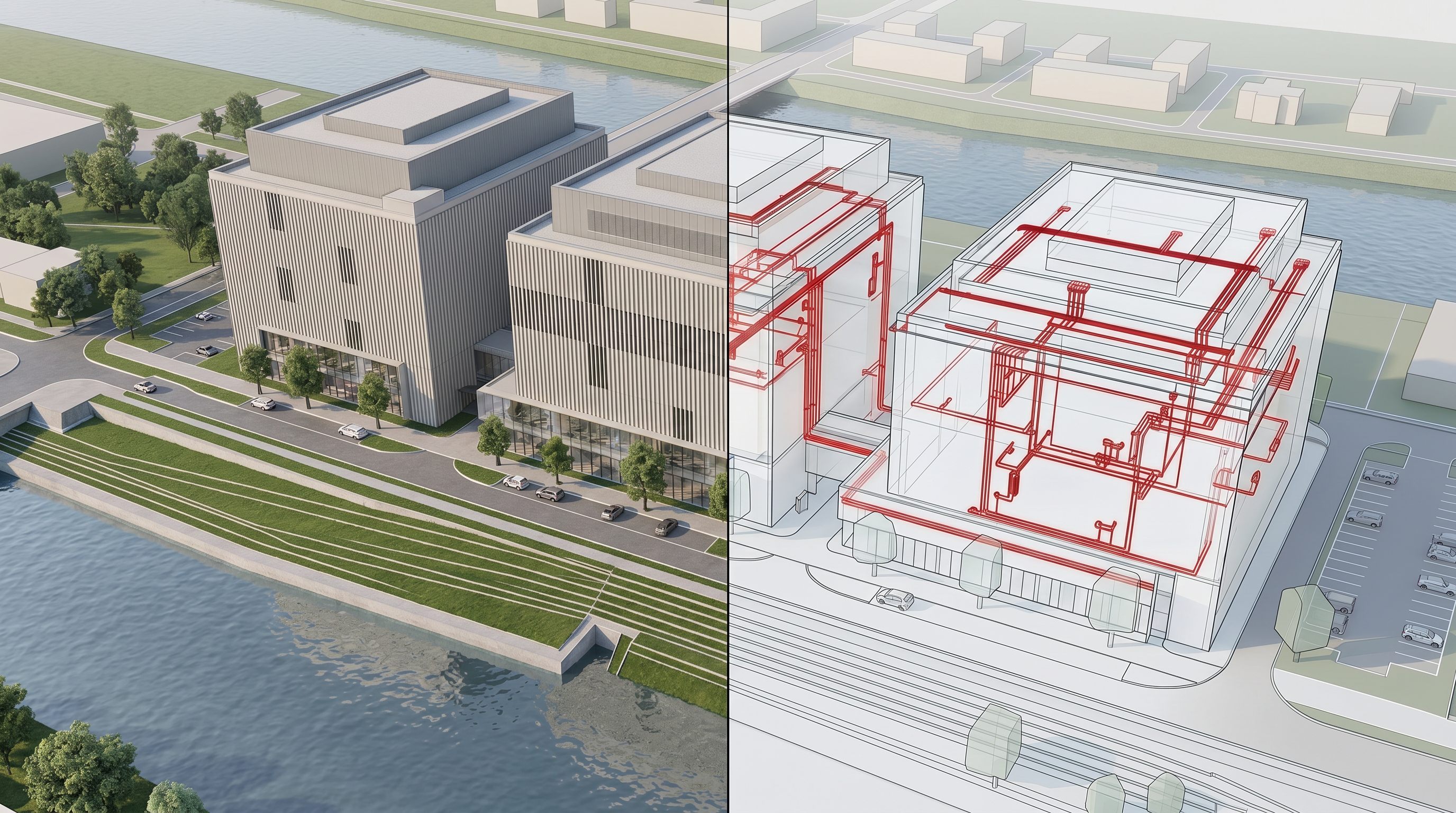
Our digital way of working
Simulation before implementation
Digital models make it possible to simulate construction processes, assembly sequences and technical dependencies even before they become reality on the construction site. Risks are minimized and execution efficiency is increased.
Digital handover and operational support
The digital twin serves as the basis for operation, maintenance and future adjustments. It enables data-based decisions over the entire period of use and helps to reduce operating costs and extend the life of systems.
Digital twin as a central database
At Heinle, the BIM model is the reliable basis for all project information. Data is maintained and updated centrally and used for planning, construction and operation. In this way, information remains consistent and comprehensible at all times.
Consistent BIM planning
We always plan projects based on models and use BIM as a standard. All relevant trades, systems and interfaces are digitally mapped, tested and coordinated at an early stage. This reduces planning errors, increases quality and creates cost security.
Real-world projects

DC30 Lübbenau
Large-scale data center project with complete model-based planning of all electrical engineering systems. BIM was used consistently through planning and execution and served as a central control base for a highly complex project environment.
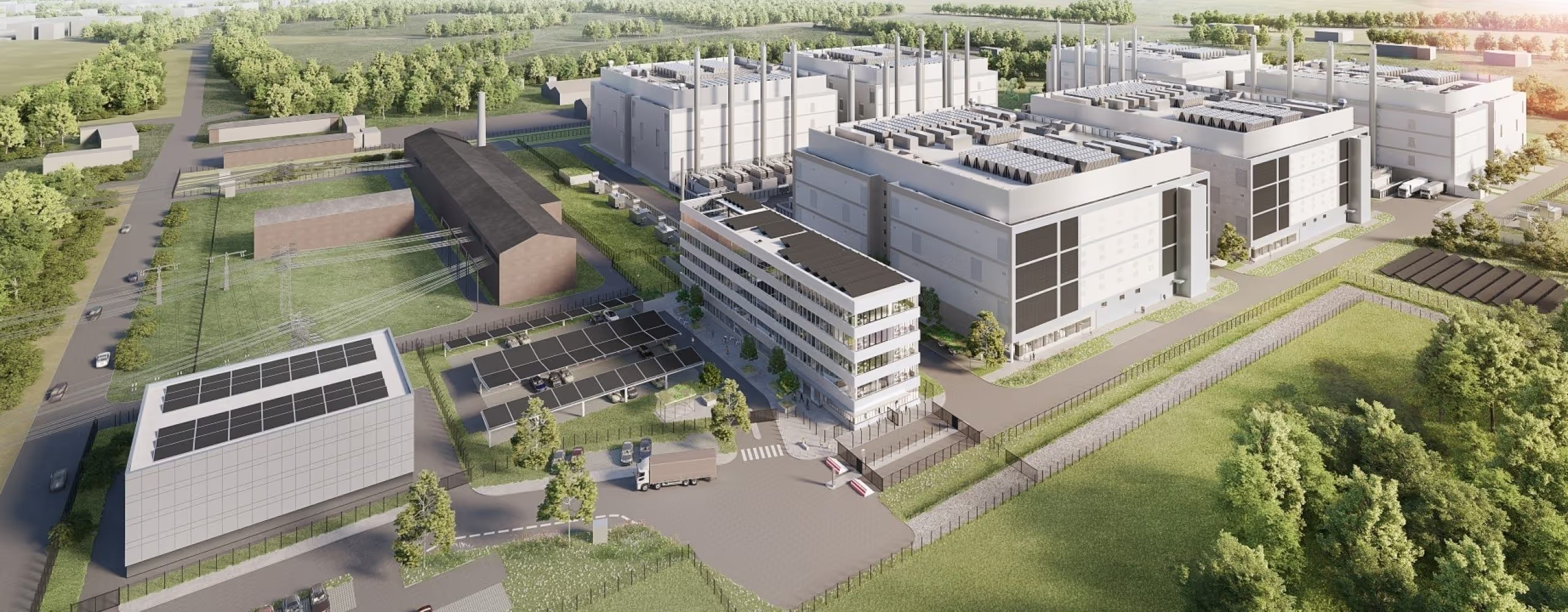
- Output around 200 MW
- Construction period 2025 to 2028
- Over 100 substations

FRA1 West Mainz
Heinle is responsible for the entire electrical implementation of the FRA1 West Mainz data center. These include medium-voltage distribution systems, busbar systems and power units.

- 24,000 m² of floor space including outdoor area
- Construction period 2024 to 2026
- total capacity of 54 MW
- Around 4,000 meters of power rail
- 2 medium-voltage main distributors
- 24 ring switchgears

ZEISS production and development site
Electrical installations for building and expanding a high-tech manufacturing environment in the semiconductor sector. The implementation was carried out in accordance with the highest standards of precision, availability and process reliability.

- Category Semiconductor
- Construction period 2024 to 2025

The true value of a digital twin lies not in visualization, but in better and faster decisions over the entire life cycle.
Quality digitally assured
At Heinle, BIM is part of a structured quality standard. Digital models are built, maintained and tested according to clear standards.
Principles such as a central database, clear responsibilities and standardized processes ensure a high level of planning quality. This is complemented by ongoing training, internal standards and close integration with quality management and commissioning.